
R Is For Radish

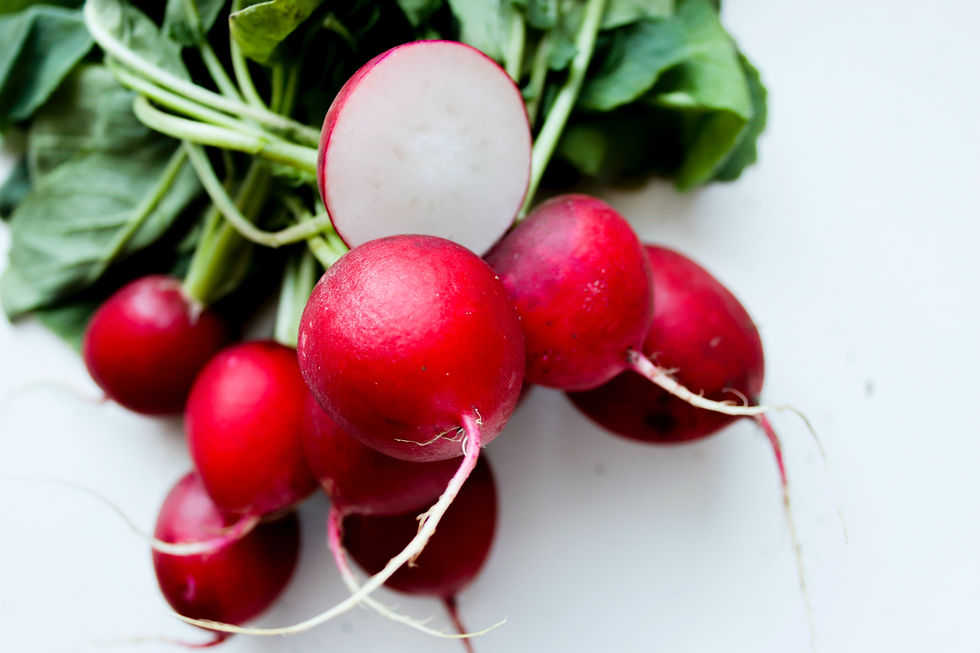
The radish rarely gets the credit it deserves. Small, crisp and unmistakably peppery, it tends to be treated as a supporting player, sliced thinly over a salad or tossed in as an afterthought at the greengrocer. Yet this humble root has a character all of its own, sharp and refreshing in equal measure, and one that rewards a little more attention than it usually receives.
Radishes are believed to have originated in Southeast Asia, though they were cultivated so widely and so early across the ancient world that their precise beginnings remain a little uncertain. The Egyptians grew them long before the pyramids were completed, the Greeks and Romans prized them for their peppery bite, and by the sixteenth century they had become a familiar sight in British kitchen gardens, valued as much for their speed of growth as for their flavour.
A Quiet Burst Of Heat
Part of what makes the radish so appealing is its sheer immediacy. Bite into one and there is an instant crispness, followed swiftly by a peppery heat that fades almost as quickly as it arrives. This sharpness comes from the same family of compounds found in mustard and horseradish, giving the radish a flavour that feels disproportionately bold for something so small.

That boldness makes the radish a useful ingredient far beyond the salad bowl. Thinly sliced, it brings crunch and a welcome bite to sandwiches and slaws. Roasted, its character softens considerably, the heat mellowing into something closer to sweetness, not unlike a turnip or a young carrot. Pickled, it takes on a tang that makes it a natural companion to richer, fattier dishes, cutting through in much the same way a squeeze of lemon might.
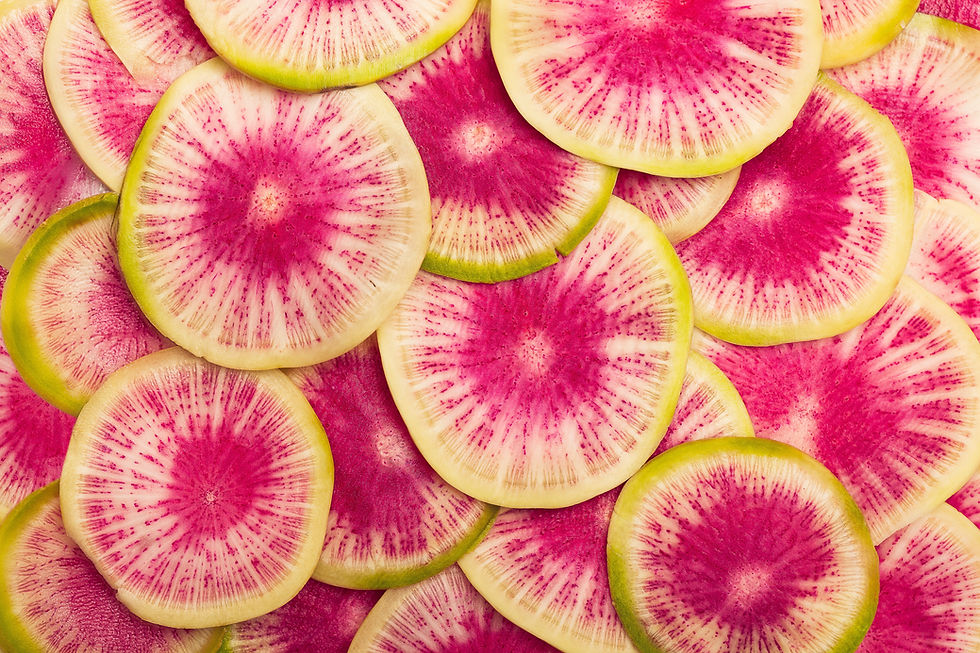
The radish also comes in far more variety than its familiar red and white form suggests. Long white daikon radishes are a staple of East Asian cooking, prized for their mildness and their ability to absorb the flavours of a broth or pickle, while French breakfast radishes, with their elegant pink and white colouring, are traditionally served simply, with nothing more than good butter and a little salt, a pairing that remains hard to beat.
Fun Facts About Radishes
Radishes are among the fastest growing vegetables, with some varieties ready to harvest in as little as three to four weeks from sowing.
The daikon radish, widely used in Japanese and Korean cooking, can grow to well over a foot in length and is often used to aid digestion when served alongside rich or fried foods.
Radish seed pods, if the plant is left to flower, are edible and offer a milder, crunchier version of the peppery flavour found in the root itself.
In parts of Mexico, radishes are carved into elaborate figures for the annual Noche de Rábanos, or Night of the Radishes, a festival held each December.
Using Radishes In The Kitchen
Serve whole or halved with good butter and flaky salt for a simple, traditional French style starter.
Roast whole with a little oil and thyme until tender, allowing their heat to mellow into something closer to sweetness.
Thinly slice and quick pickle in vinegar, sugar and salt for a bright, tangy addition to sandwiches and rice bowls.
Grate into a slaw with carrot and apple, dressed with a little mustard and olive oil for a peppery, crunchy side dish.
The radish may be small, but it has a character that punches well above its size. Whether enjoyed raw with butter, roasted until sweet or pickled for a sharp finishing touch, it proves that even the humblest ingredients have something worth celebrating.
As the saying goes, good things come in small packages, and the radish, with its quiet bite and quick charm, is proof enough of that.


